







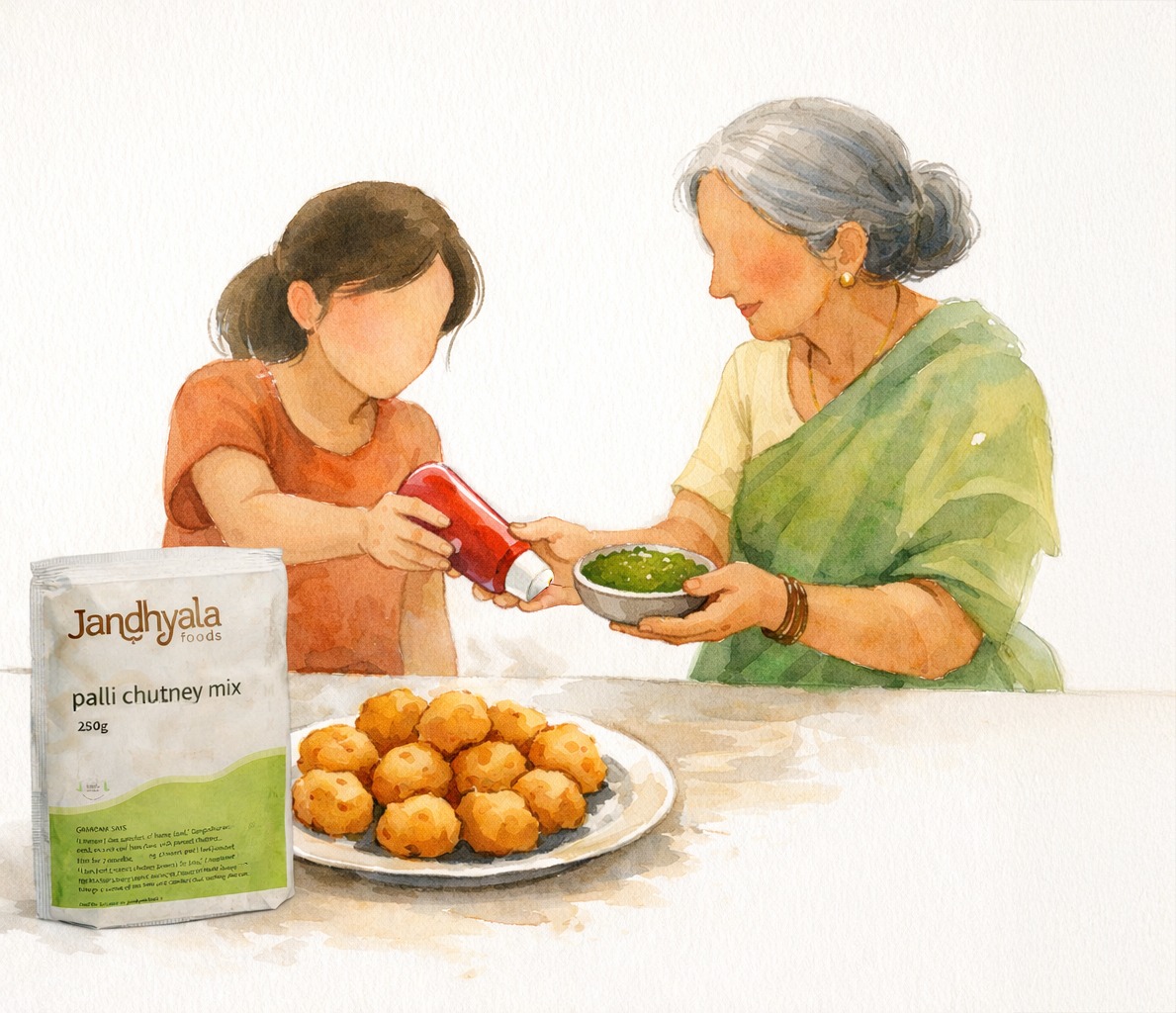
“Anna! Two plates of hot bajjis, please!” Srijanani called out, her voice full of excitement as we reached the small eatery.
My daughter and I had come to the market, and just as we were heading back, it started raining. Cold weather and rain, who wouldn’t crave hot bajjis? It was Srijanani’s idea to stop and enjoy, and I agreed.
The smell of crispy bajjis filled the air, making our stomach growl. While we waited, Srijanani grabbed two stools for us to sit. Soon, plates with steaming hot bajjis arrived. But then, my excitement quickly turned into confusion.
“Sauce?” I muttered, staring at the plate. Instead of the usual ground chutney or putnala chutney, there was ketchup sitting on the plate.
“Ketchup?” Srijanani echoed, her excitement fading.
She hesitated for a moment before picking up a bajji and dipping it into the ketchup.
“It’s okay,” she said with a shrug, “but it’s just not the same without chutney.” She took another small bite, clearly missing the chutneys we were used to.
As we ate the bajjis, I couldn’t stop thinking about how ketchup, something so foreign to India and its authentic tastes, had started to replace our traditional chutneys.
“What’s on your mind, Amma?” Srijanani asked, noticing me lost in thought.
“When I was young, sauces and ketchups weren’t a part of our meals. But now, they are often served with so many of our regional dishes—bajji, pakoda, paratha, dhokla and even chapati. I wonder how that happened,” I said, sharing my thoughts.
The journey of sauce into our kitchen platforms
“Hmm..that’s true amma. These weren’t common back then,” Srijanani began finishing the bajjis on her plate. “These products were introduced to India by the British during colonial times. They were mostly used in elite households or clubs since they were imported and expensive.”
“Then how did they become an integral part of our kitchens?” I asked again.
“After independence, Indian companies started making ketchups and sauces locally. That’s when they became affordable and accessible. Gradually, aggressive marketing and lower prices brought it into everyone's home. Families started pairing it with samosas, pakodas, and sandwiches”
“What made people adopt these so quickly, Srijanani?” I asked, still curious.
By now, we have finished our bajji and started walking back home.
“Amma, though marketing played a big role but that was not the only reason,” she began, “In an evolving fast-paced world, convenience matters more than tradition. Ketchup and sauces felt easy to grab and use. They save time in the kitchen giving quick bursts of flavours.”
“People are using it so often, Srijanani. And, I don’t think they are completely safe and healthy?” I expressed concern.
“Most of these store-bought condiments are loaded with preservatives, artificial flavours, and too much sugar and salt, Amma. And, people are trading their health and tradition for these because they are convenient”, Srijanani replied.
“Our traditional pickles and podis too are convenient, Srijanani. Why are people not choosing them?”, I asked.
The perfect swap for your store-bought condiments
“You are right amma, I too think our pickles and podi are convenient, affordable, long shelved and also customizable to our taste and dish”, Srijanani replied.
“Not only that, they are also healthy comparatively”, I replied elaborating the reasons to choose our pickles and podis.
Reasons to choose traditional food over packed
- Quality Ingredients: Traditional podis, pickles, and chutneys are made from natural ingredients like vegetables, curry leaves, tamarind, garlic, and spices. They are not just tasty but also packed with nutrients that are good for us.
- No Harmful Additives: Unlike bottled sauces that use preservatives to last longer, traditional pickles and podis do not need preservatives and are made naturally making them healthier to eat.
- Health Boosters: Ingredients like turmeric, cumin, sesame seeds, curry leaves, regional fruits and vegetables in our traditional recipes are not just flavourful but are also known to improve our immunity.
- Rich Flavours: For instance, a spoonful of avakaya pachadi, allam pickle or a sprinkle of idly karam podi on dosa or idly, nimmakya karam or tomato pachadi with chapathi brings rich and unique flavours that sauces can’t match.
- A Taste of Tradition: Podis and pickles are more than just food—they connect us to our culture carrying stories, memories and authentic flavours.
“That’s very detailed amma!”Srijanani said relaxing on the sofa as we returned home.
As I stepped into the kitchen, I thought of the flavours I grew up with - the tangy chutneys, spicy sweet pickles, tasty podis, and crispy fryums. These aren’t just food, they are a big part of our traditions, made with love and care. While sauces and ketchups are easy to grab, they can never match the flavours of our own recipes.
Traditional Alternatives for sauces and ketchups
Like Srijanani and me, if you enjoy traditional flavours and prioritize health along with convenience, here are some authentic alternatives you should try:
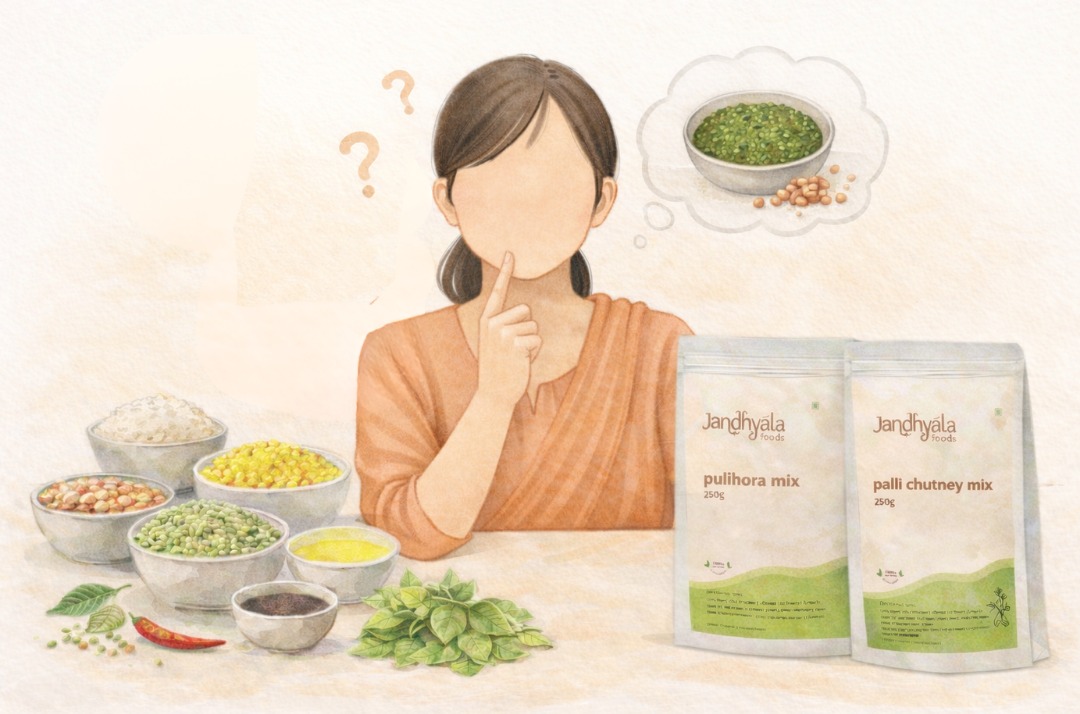
- Bajji (Vegetable Fritters): If you are dipping your bajjis in ketchup, try replacing it with putnala chutney, or palli chutney. These pair perfectly with the crispy snack, and for your convenience you got these instant mix for you! No preservatives and no added flavours. In case you prefer something tangy, try tomato pachadi.
- Pakoda (Fried Gram Flour Snacks): Pakodas are often served with ketchup these days, but they taste much better with putnala chutney, tomato chutney or mint-coriander chutney.
- Idli: For idlis the classic pairing of coconut chutney and sambar remains the best. You can also enjoy them with idly chutney podi, kandi podi, or karivepaku podi mixed with ghee for extra flavour. We also have the best sambar podi waiting for you.
- Dosa: These days, dosas are often topped with cheese and sauces, but the authentic way to enjoy them is with palli chutney, putlana chutney, sambar, or even a pinch of nuvvula podi.
- Paratha (Stuffed or Plain): While parathas are commonly paired with sauces and plain curd today, it tastes comforting with refreshing curd, avakaya or magaya. You can also enjoy them with lemon pickle or bellam avakaya for a mix of sweetness and spice, or even with a bit of avakaya mixed with curd.
- Upma: Although upma sometimes gets paired with ketchup, it’s best when served with tomato pickle, any podi mixed with ghee, or spicy magaya with curd for extra flavour.
- Pulao and Fried Rice: These dishes often come with ketchup, but the traditional way is with raita or fresh vegetable salads. For a burst of flavours, try them with boondi raita.
At Jandhyala, we make pickles, podis, and pre-mixes with lots of love and no preservatives. Every product brings traditional flavours to your meal. Our pickles are authentic, our podis are full of taste, and our premixes are easy to cook, healthy and delicious. So grab your favourite and enjoy the real flavours!
 Home
Home
 About Us
 Stories
 Return Policy
 Privacy Policy
 Cookie Policy
 Pickles
 Powders
 Papads
 Pre-Mixes
 Combos
 Masalas
 My Account
 My Orders
 My Favourites
 Sign Out

