







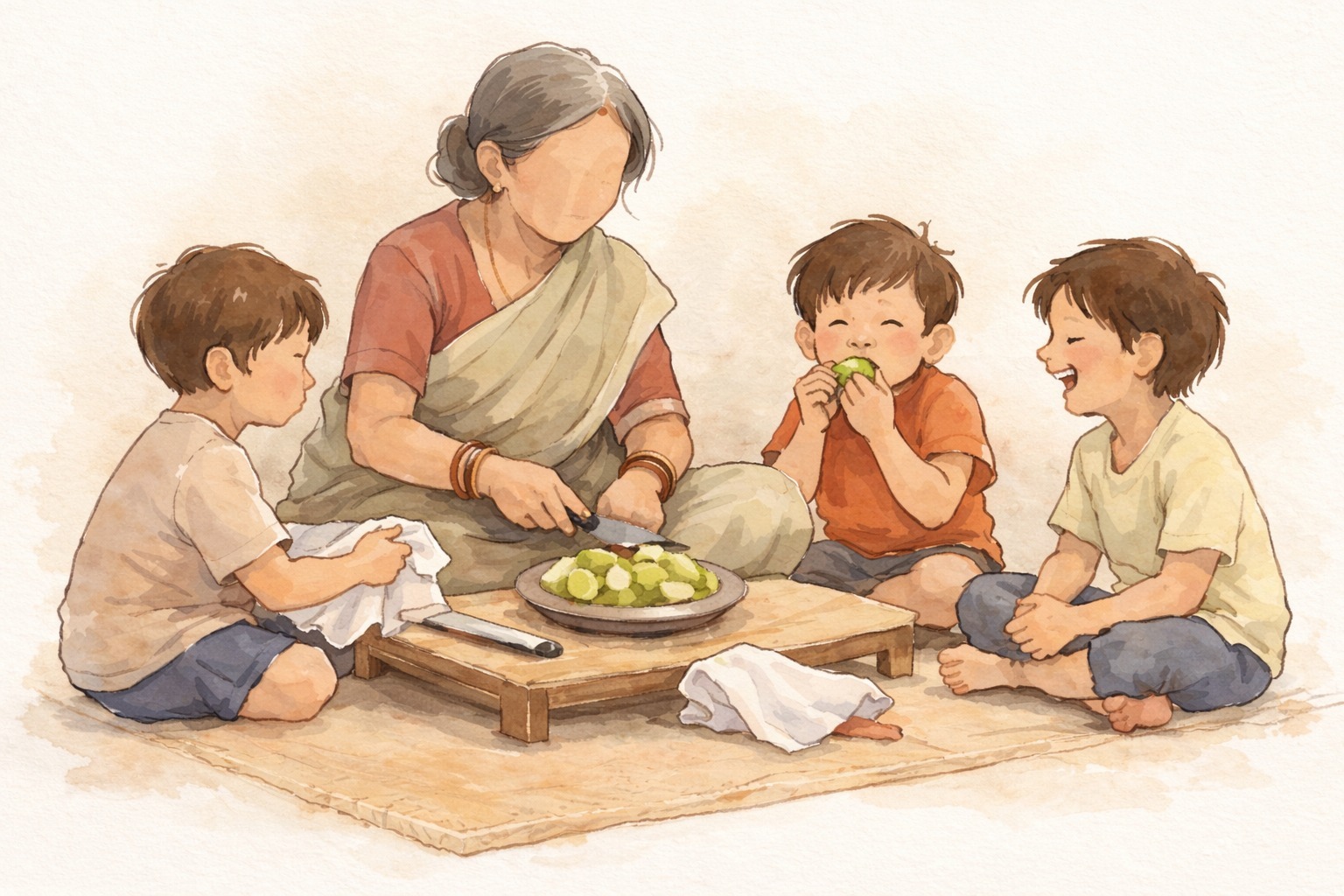
"Clean your hands before you pick more Usirikayalu, Maitreyi!" Gargi reminded her younger cousin, who was busy taking little bites of the tangy fruit while sipping water.
It is October, and my grandchildren are here for a short vacation. We are all in the backyard, gathering amlas to make the amla pickle. While Karthikeya and Shruti love usirikaya roti pachadi, Gargi, Maitreyi and I love usiri avakaya pachadi. The four of them are busy filling their baskets with amlas, each competing to pick more than the others. I sat nearby, listening to their chatter and watching their joyful faces.
Maitreyi took another big bite, ignoring Gargi’s advice, and her eyes lit up at the burst of flavours. "I love this taste!" she exclaimed, sipping more water.
"If you eat all the amlas now, what will Ammamma use to make amla pickle?" Karthikeya asked, worried. The others laughed while Maitreyi nodded as if she understood.
Watching them like this took me back to my own childhood. Every October, as the first batch of amlas arrived, we would gather in the kitchen around my grandmother to make Usiri Avakaya Pachadi. It was more than a recipe—a tradition she passed down to my mother and me- one that filled our home with the tangy aroma of Usirikaya and the warmth of togetherness.
The Tangy Surprise of Usirikaya
"What’s so tasty about amla and water, Maitreyi?" asked Shruti, watching her cousin curiously.
"It’s… sour at first, then tangy, and then… kind of sweet!" Maitreyi said, still confused by the mix of flavours she was enjoying.
The others, intrigued by her reaction, gathered around to try it themselves. Each of them took a bite of amla and sipped water, their faces lighting up as the flavours transformed on their taste buds.
"Ammamma, it tastes sweet! It’s like magic!" Shruti exclaimed at the unexpected burst of sweetness.
I smiled. Amla’s sharp, tangy taste hits first with sourness and a hint of bitterness. But when you sip water afterward, an unexpected sweetness and coolness takes over, making it a refreshing experience.
“Where is the sweetness coming from in a sour amla, Ammamma?" asked Gargi, confused.
"Amla’s sour and slightly bitter taste comes from its natural acids, especially vitamin C. When you sip water, these acids create a sweet aftertaste, making amla even more enjoyable!" I explained.
"Oranges have Vitamin C too, but I never tasted sweetness like this from them," said Shruti.
Health Benefits of Amla Pickle
"Amla has more Vitamin C compared to oranges. This vitamin gives our bodies strength to fight off colds, especially in winter" I explained as they resumed collecting the usirikayalu.
"Is that why you make the best Usirikaya pickles every winter?" asked Karthikeya excitedly.
"Yes, they are our little winter helpers. And we also need their help throughout the year. I pickle them in winter so that you can enjoy them and their benefits all through the year" I explained.
Shruti looked up thoughtfully. "Is that why you ask us to eat more amla in winter than in summer?" she asked.
"Well," I said, picking up an amla, "apart from boosting immunity, this little fruit also has special powers. Amla can fight off the germs and tiny invaders that make you sneeze and cough. It has antibacterial and antiviral properties that help our bodies stay safe, especially in winter."
"Hmm…you hid so many secrets inside your tummy!" Karthikeya said playfully, speaking to the amla.
"Yes, it hid a few more secrets from you, Karthikeya," I laughed at his playfulness.
"Amla is high in fibre and works as an excellent digestive aid. It can improve your gut health and keep your little stomachs happy!" I added.
"That’s why we eat these pickles with meals?" Gargi asked, seeming to have understood everything.
"Yes,” I said. "Sometimes, our food can feel heavier, and amla’s digestive benefits keep our tummies light and happy."
"Seems like our amla is an all-rounder, Ammamma," Shruti said as we all gathered our baskets and started back home.
"Amma also says that amla is good for hair and skin," added Gargi.
"Yes, Gargi. Amla has special nutrients that keep our skin and hair hydrated. When we eat amla, it helps our skin stay soft and healthy, and protects against dry and cold weather."
Wrapping Up the Day
Amla is a fruit with many gifts. Apart from all the above health benefits, it’s also anti-inflammatory, helps regulate blood sugar, is high in antioxidants, and even acts as a natural detoxifier.
As we headed home with our baskets of usirikayalu, I felt a warm sense of contentment, thinking about all the fun we had picking amlas together. Each bite of amla brought smiles, laughter, and a bit of learning. I love making pickles with my grandchildren—one day, these small, joyful moments will become the memories that bring us together, even when they are all grown up.
Missed out on making Usirikaya roti pachadi this October? Don’t worry! We have got you covered with the best Telugu pickles online. And guess what? Our authentic Usiri Avakaya and Palla Usiri, packed with health benefits and love are waiting for you. Order our Amla pickles online and bring the taste of tradition home!
 Home
Home
 About Us
 Stories
 Return Policy
 Privacy Policy
 Cookie Policy
 Pickles
 Powders
 Papads
 Pre-Mixes
 Combos
 Masalas
 My Account
 My Orders
 My Favourites
 Sign Out

