







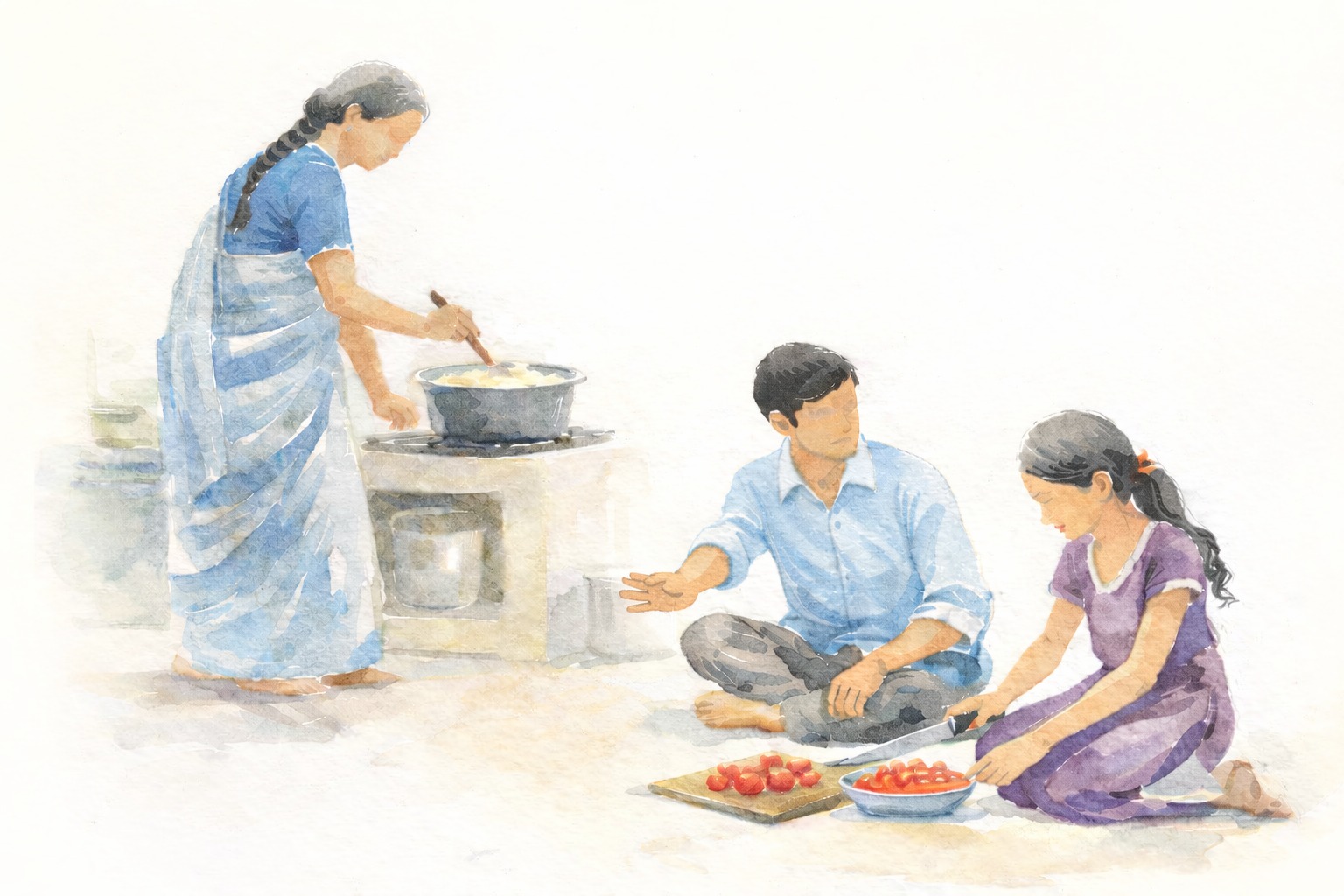
“Put it on a low flame,” I instructed Ananth, keeping an eye on the bubbling pot.
“It still needs a bit more time,” Ananth replied, peering into the pot where the rice and dal were boiling.
“We will lower the heat once it’s ready, pinni” he added.
Ananth, my elder sister’s second son, has always been fascinated by food. He loves experimenting with different recipes and has travelled the world exploring various cuisines. This afternoon he is here to spend time with us before his next trip.
“Hmm... something smells amazing in the kitchen. Are we making pappu charu?” Srijannani asked, having just returned from the college.
My daughter Srijannani is doing her degree in home science. She too is fond of cooking and enjoys learning about regional cuisines of India and the world.
“No, Srijannani,” I said, offering her a glass of water.
“It’s not pappu charu. Ananth and I are making Kadambam today.” I added.
“Kadambam?” Srijannani’s face lit up with curiosity at the mention of a new dish.
“Yes, it’s a traditional dish made with a mix of dal, rice, and lots of vegetables, cooked together with aromatic spices and finished off with a rich ghee tempering,” Ananth explained, stirring the pot gently.
“Oh, it sounds a bit like sambar rice,” she said, settling down next to the chopping board and the bag of vegetables.
“Let me help you with the vegetables then,” she said, picking up a knife and starting to peel the potatoes.
“That’s the unique part about Kadambam,” Ananth added. “Unlike sambar, we only use vegetables that are native to India”
“Got it, Anna,” Srijannani nodded, reaching for tomatoes from the bag.
“We use vegetables only native to India”, repeated Anantha with a smile.
Srijanani looked confused and stared at both of us.
Tomatoes are not native to India?
“No, tomatoes are not native to India, Srijannani,” I said, hoping to clear up her confusion while dry roasting the spices for Kadambam.
“Really?” she asked in surprise, reaching out for pumpkin this time.
“They actually are from America”, I guessed, gesturing Ananth to confirm.
“Yes, pinni. They are from South America. People there cultivated and consumed them for ages before they were introduced to the rest of the world.”, he said, chopping the raw banana.
“So, how did they get to India?” Srijannani asked curiously, peeling the pumpkin.
“Around the 15th century, a few Spanish explorers found tomatoes in South America. They carried them along and introduced them to Europe”, Ananth narrated.
“Do Europens know how to use them?”I asked, curious to know how long it took for them to learn its versatility.
“At first, Europeans weren’t sure about these strange fruits. People were hesitant to eat them Pinni and for a long time, they were used to decorate gardens rather than dishes.”, Ananth said laughing slightly
“Gradually they explored its tastes and started using them in their kitchens”. added Ananth, placing the chopped vegetables to boil.
Who got tomatoes to India?
“But, how did they reach India?”, repeated Srijanani eager to know.
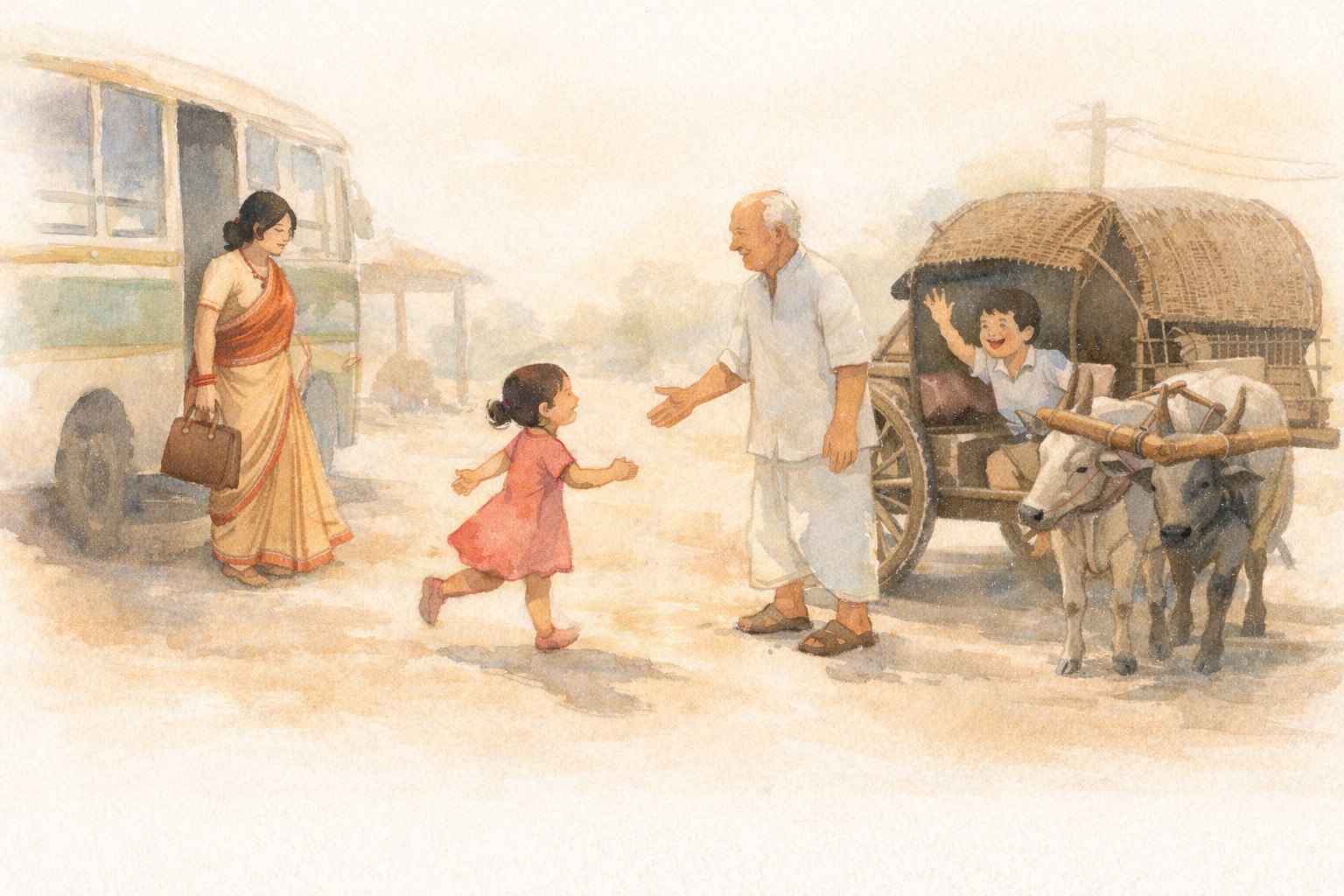
“Portuguese are the first Europens to reach India. As they sailed around the world, trading and exploring, they brought tomatoes to India from Europe” Ananth said with a spark of excitement in his voice.
“So the Portuguese were responsible for bringing them!!” Srijannani nodded while stirring boiling vegetables.
“Yes, initially they were introduced only in the coastal region. But gradually they spread across becoming a staple food in India”, said Ananth.
“Did Indians know how to use them?”. I repeated the same question grinding the roasted spices.
“It’s the same again, pinni. It did take a while for our home cooks to learn how to use them. It is their innovation that gave these tangy, slightly sweet tomatoes a special place in Indian cuisine”, added Ananth.
I stood there amazed, thinking about how much passion and patience it takes to discover all the possibilities of using a new vegetable.
The Tomatoes today
“What do you think was the first dish Indians made with tomatoes?” asked Srijannani, interrupting my thoughts.
“Hmm, maybe tomato pachadi,” guessed Ananth after pausing a while. “Back then, tomatoes were exotic and valuable, so people might have tried to preserve them as a pickle to enjoy them anytime.” Ananth justified.
“Perhaps that is the reason tomato pachadi still holds that special place among all the dishes made with tomato”, he added.
Srijannani nodded while her mind drifted to another possibility.
“Or it could have been tomato rasam,” she added. “The best recipes are often the result of happy accidents. Someone might have dropped a tomato into boiling water and discovered how delicious it made the rasam!” she added with a giggle.
As both of them discussed the possibilities, I mixed the boiled vegetables with cooked rice, dal and spices.
“Whatever the first dish was, tomatoes have certainly become a staple in our kitchen,” I said.
“Absolutely, Pinni,” Ananth agreed.
“Along with its versatility these fruits hold incredible health benefits. Tomatoes are packed with vitamins, minerals, and antioxidants.” added Ananth.
“They add such a vibrant flavour and colour to our food,” Srijannani said. “I can’t imagine a meals without them!”
“But we do have a delicious meal ready without tomatoes today!”, reminded Ananth pointing at the colourful hot rice sitting on the stove.
“Do you think it tastes great with our spicy tangy tomato pachadi?? Let’s give it a try!!”, said Srijannani reaching out for the pickle jar.
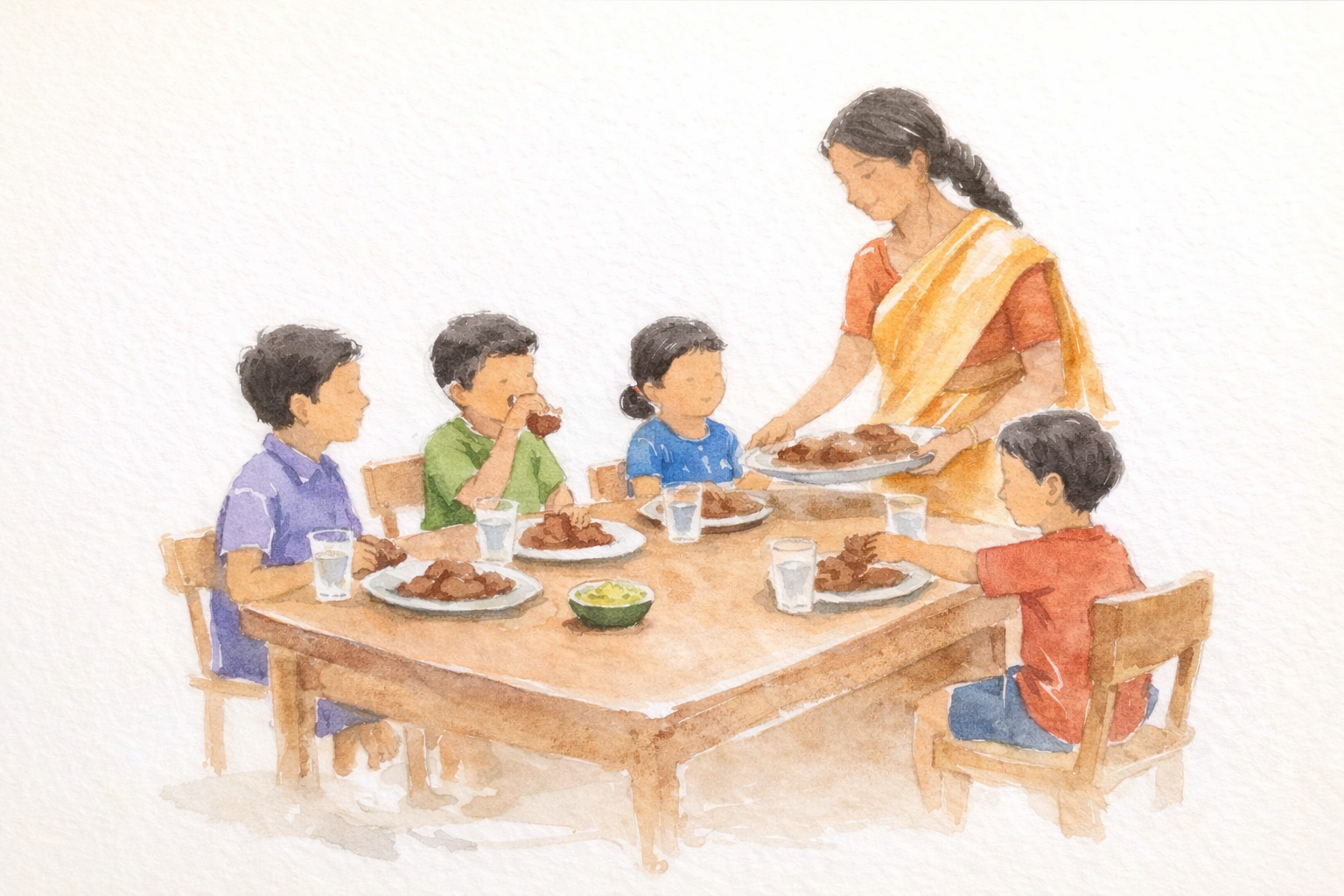
As we continued to chat, the kitchen was alive with the aroma of the food and the sounds of heartfelt laughter. Memories like this afternoon not only nourish bodies but also bonds. Slowly we settled down to enjoy our meal together.
—-----------------------------------------------
Pinni - Mother’s younger sister
Kadambam - A traditional south Indian dish made with dal, rice and vegetables
 Home
Home
 About Us
 Stories
 Return Policy
 Privacy Policy
 Cookie Policy
 Pickles
 Powders
 Papads
 Pre-Mixes
 Combos
 Masalas
 My Account
 My Orders
 My Favourites
 Sign Out

